
It started as a thumbnail
Before it became a print, a painting, or a series, it was a small sketch.
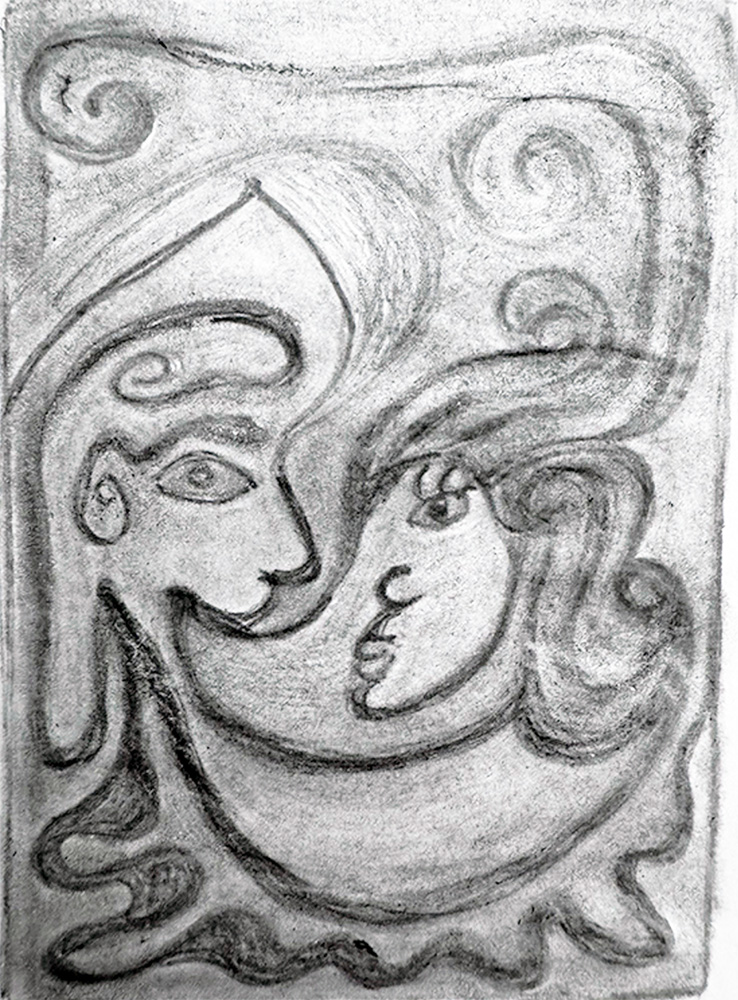
One evening, feeling frustrated that I wasn't more prepared with sketches for my printmaking assignments, I was flipping through a library book of Pablo Picasso’s printmaking works. I was drawn to his cubist-style faces, where he shows a single head from multiple perspectives. However, some of his prints looked to me like two separate profiles staring directly back at one another.
I decided to try my own version of that layout, but using fluid, swirling curves instead of sharp, rigid lines. When I finished the sketch, I realized the swooping lines made it look as though a man were blowing smoke, and a woman had appeared inside the cloud, staring back at him. That discovery inspired the title, "Blowing Smoke."
At the time, I wasn't expecting much from the drawing; it only existed as a quick 2x3-inch blueprint to help plan my first linocut assignment.
The linocut
The first carving attempt stayed close to the 2x3-inch scale of the sketch. Because it was my first time working on such a tiny piece of linoleum, the tools slipped, and I accidentally gouged out the entire face of the woman.
While the ruined print still looked kind of cool, I worried the original sketch was simply too detailed for such a small block and that I should start over with something much simpler.
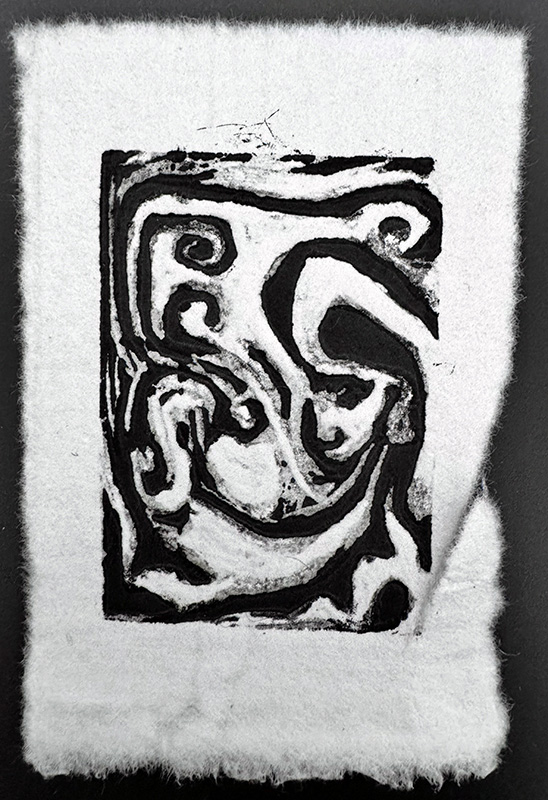
Instead, my professor suggested enlarging the sketch on a copy machine and trying again on a larger piece of linoleum. I am so glad he did. Giving the lines more room to breathe completely changed the process. On the larger block, I felt comfortable enough to freehand a carved border around the composition, even tucking my initials into the bottom left corner.
Carving the image into linoleum is a process of subtraction. You remove everything that is not the image. The composition that existed loosely as a sketch had to become permanent. Every cut became a decision I could not take back.

Black and white linocut
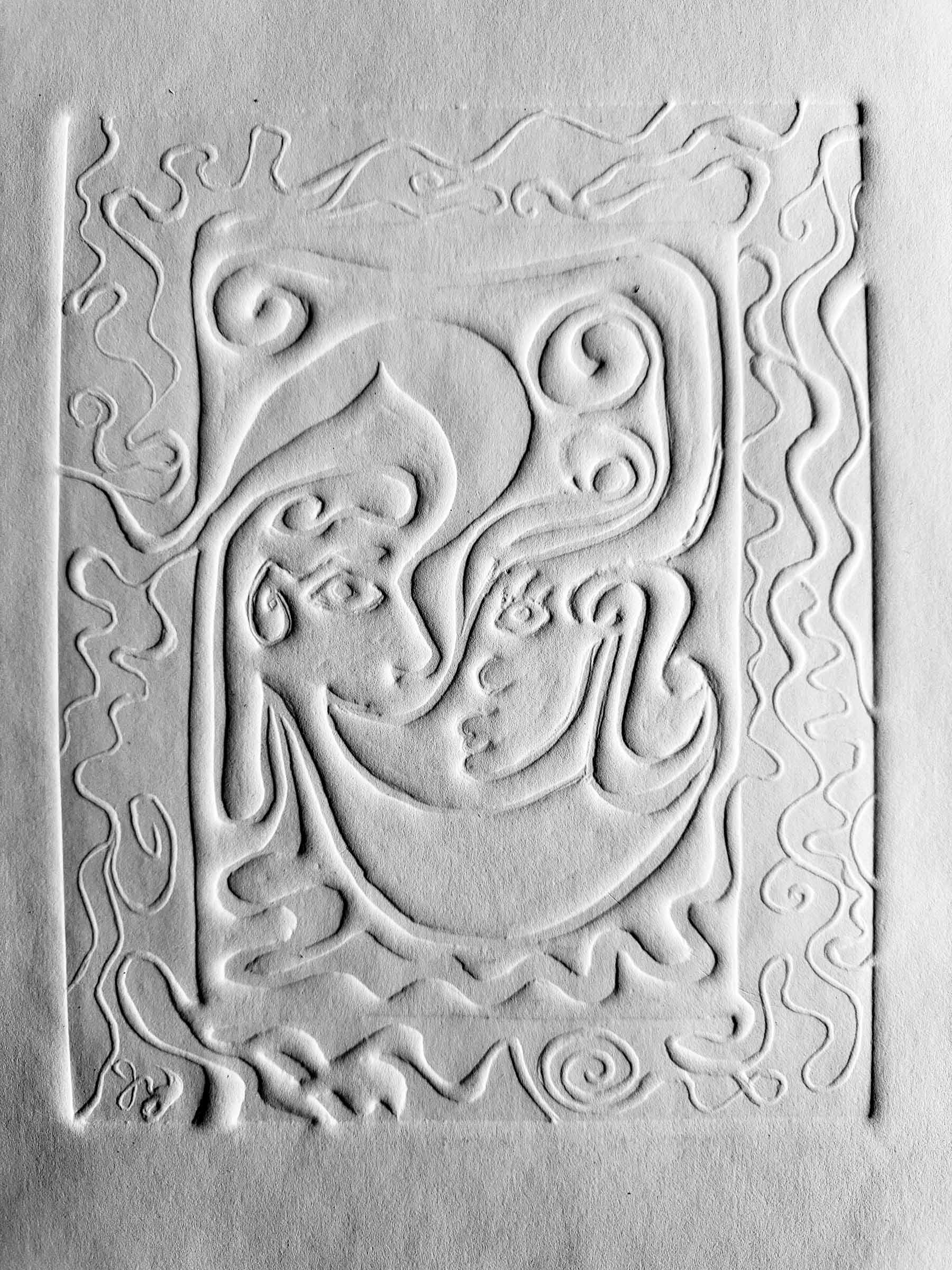
Embossed linocut impression · no ink, only pressure
The screen print
Screen printing introduced a completely different set of rules. The challenge here wasn't about carving lines, but learning through trial and error how to manage the ink. At first, I couldn't find the right balance. I either used too little ink and got an incomplete image, or used way too much and made a massive mess all over the edges of my paper.
Once I finally got a feel for the correct amount of ink, the proper angle of the squeegee, and just how much pressure to apply, the process became much smoother. Getting past that learning curve allowed me to start having fun and experiment with different color combinations.
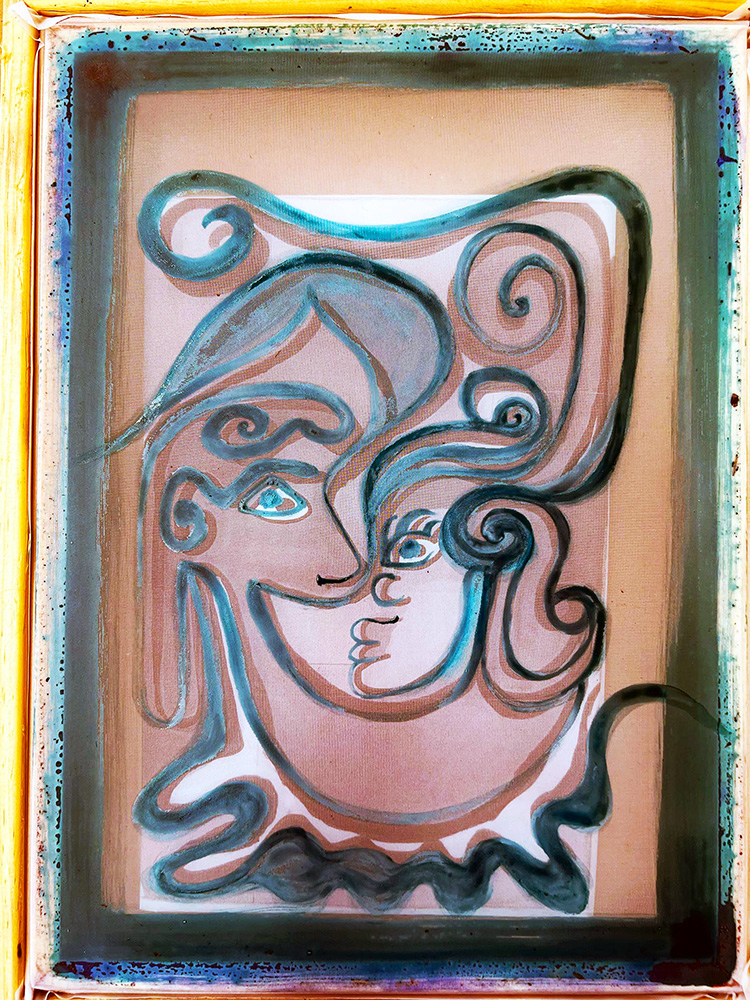
Initial screen
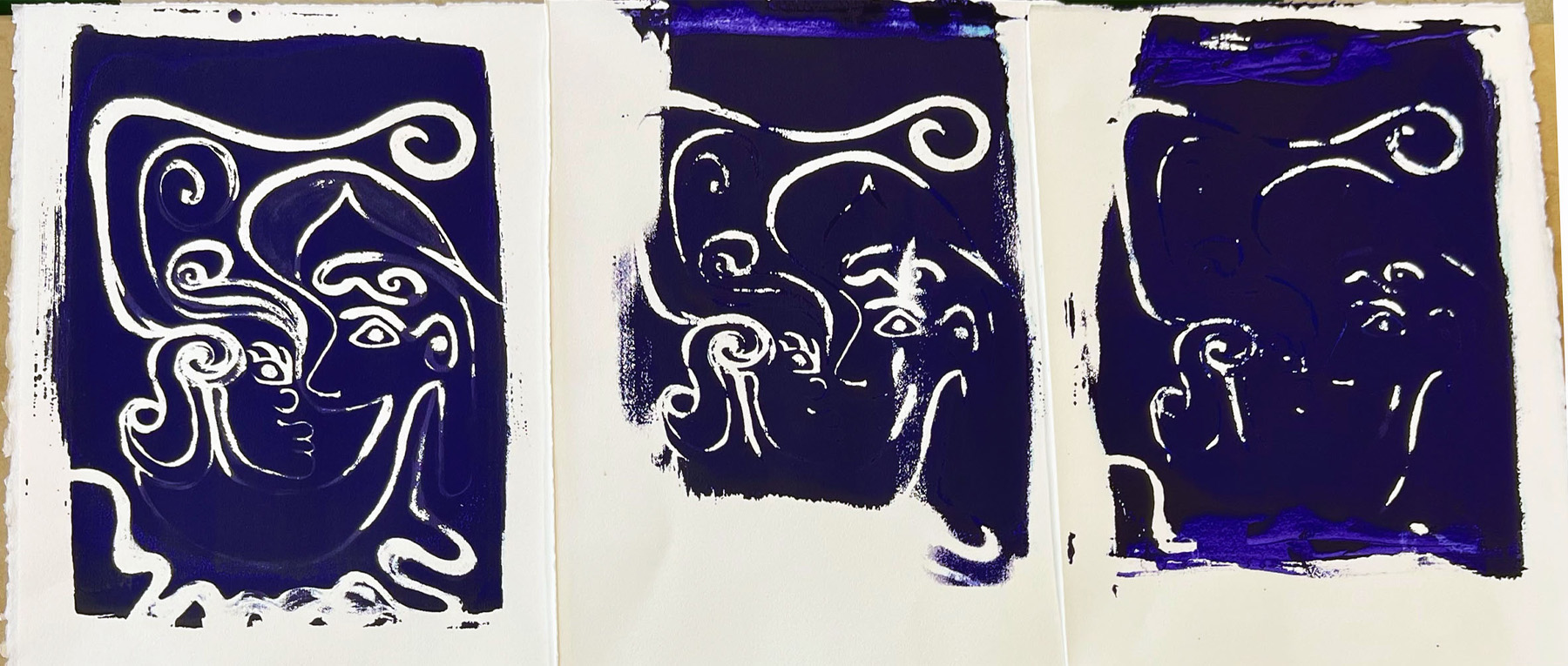
Initial failed screen print attempt
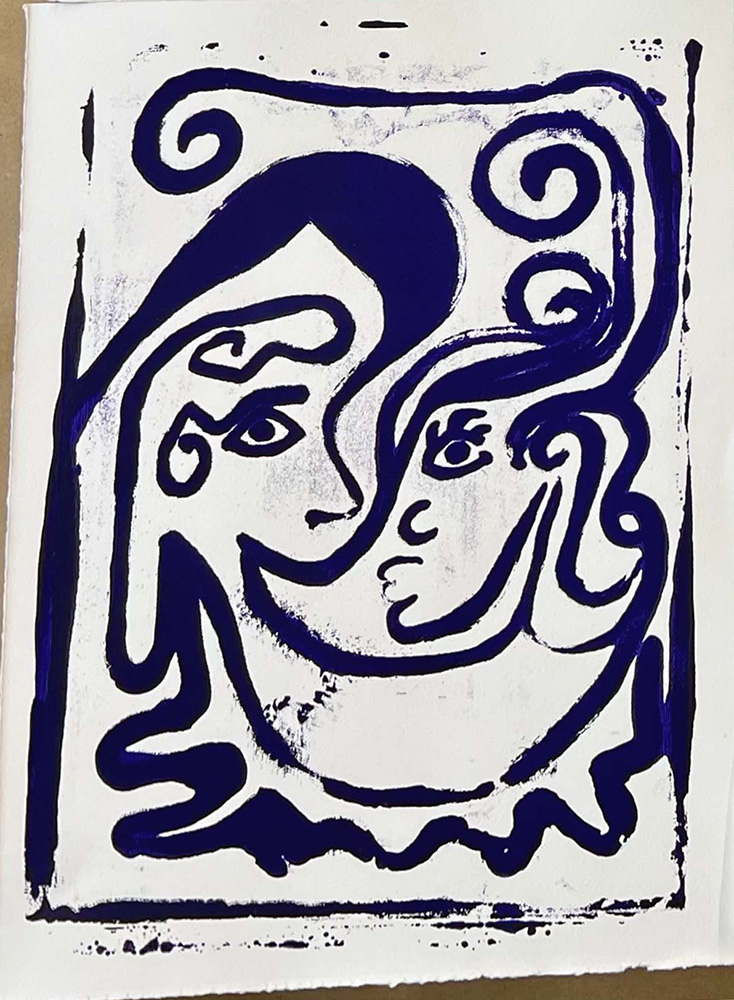
Further attempts and inverted variations
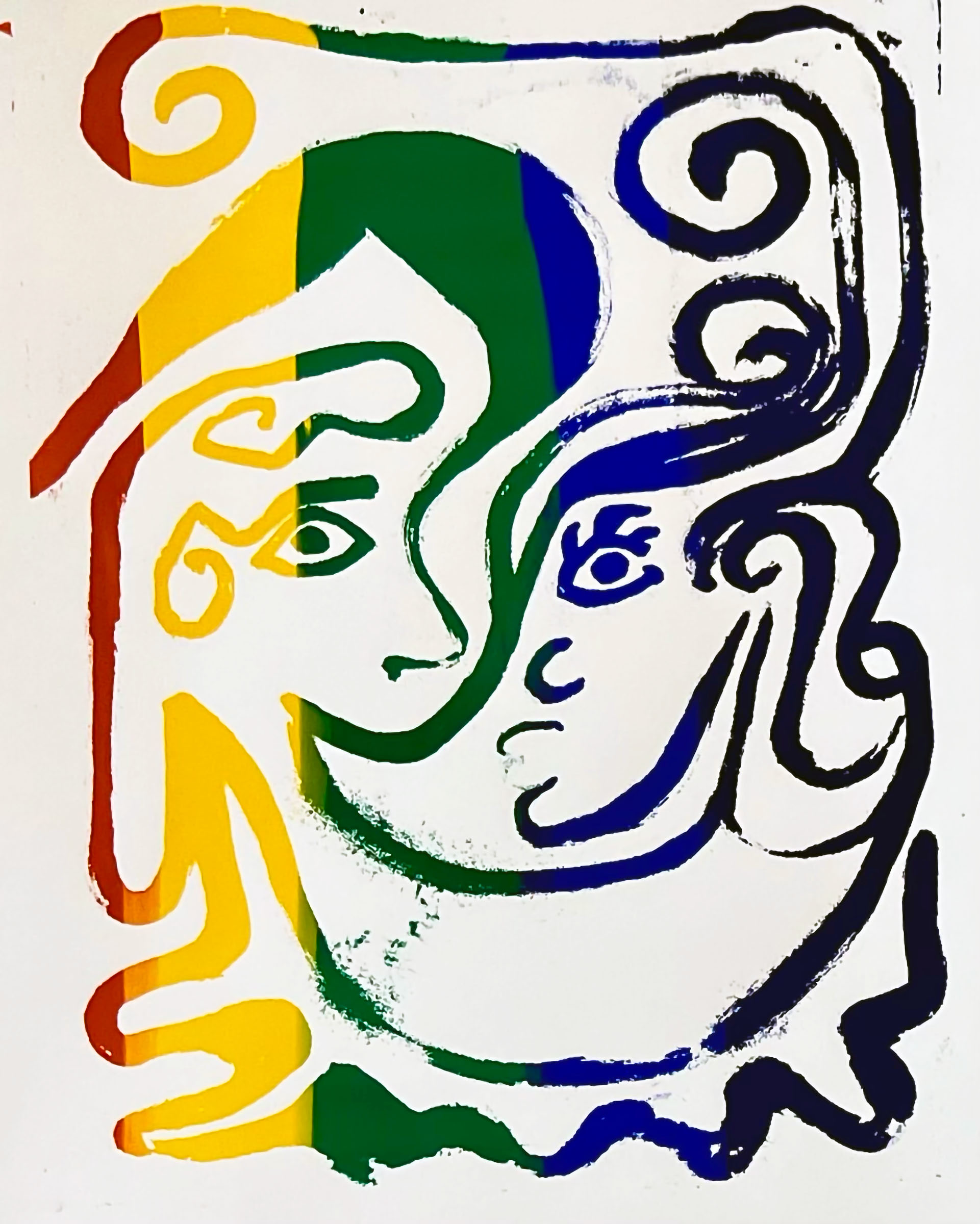
Rainbow screen print
The painting
Taking the image into oil paint meant changing the scale entirely. Rebuilding the composition on a large canvas required moving away from the flat, quick execution of printmaking inks. Working in oil allowed me to slow down and focus on building up layers of solid color, turning a quick, spontaneous thumbnail sketch into a large, deliberate painting.
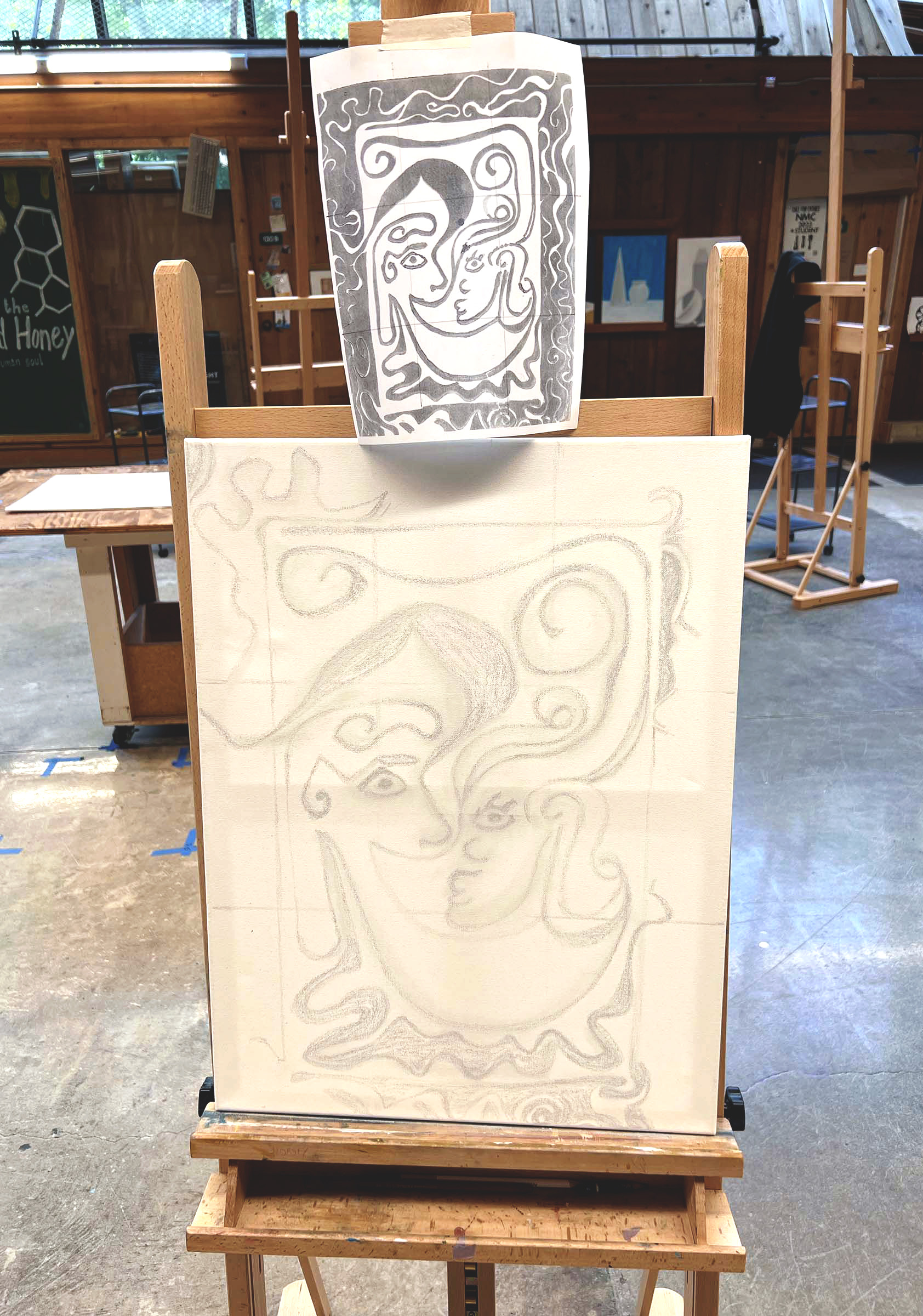
Canvas with reference print
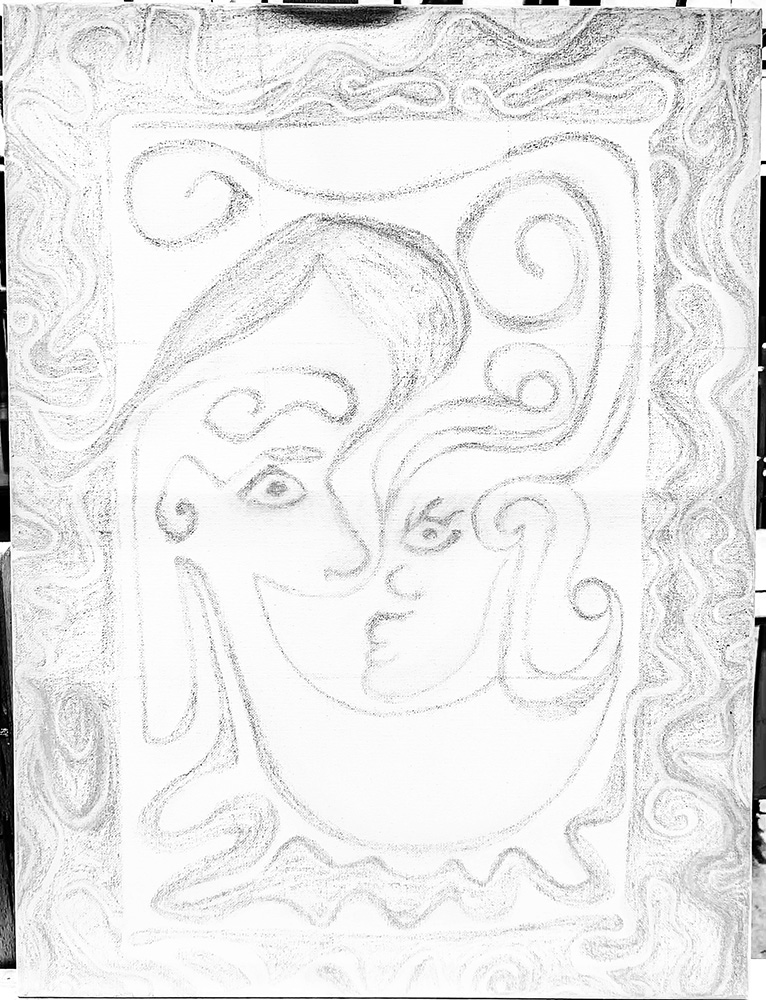
Chalk outline on canvas
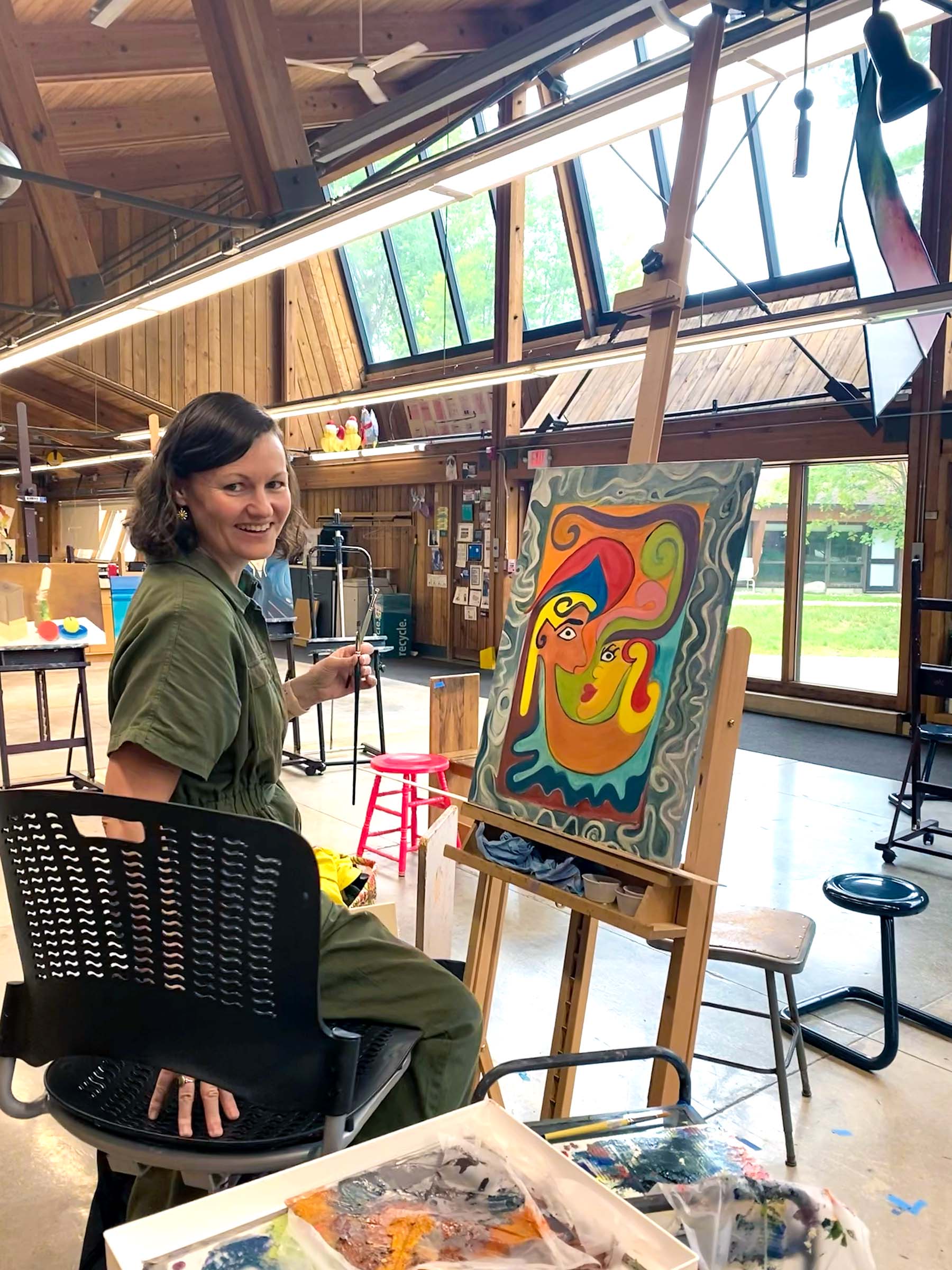
In the studio
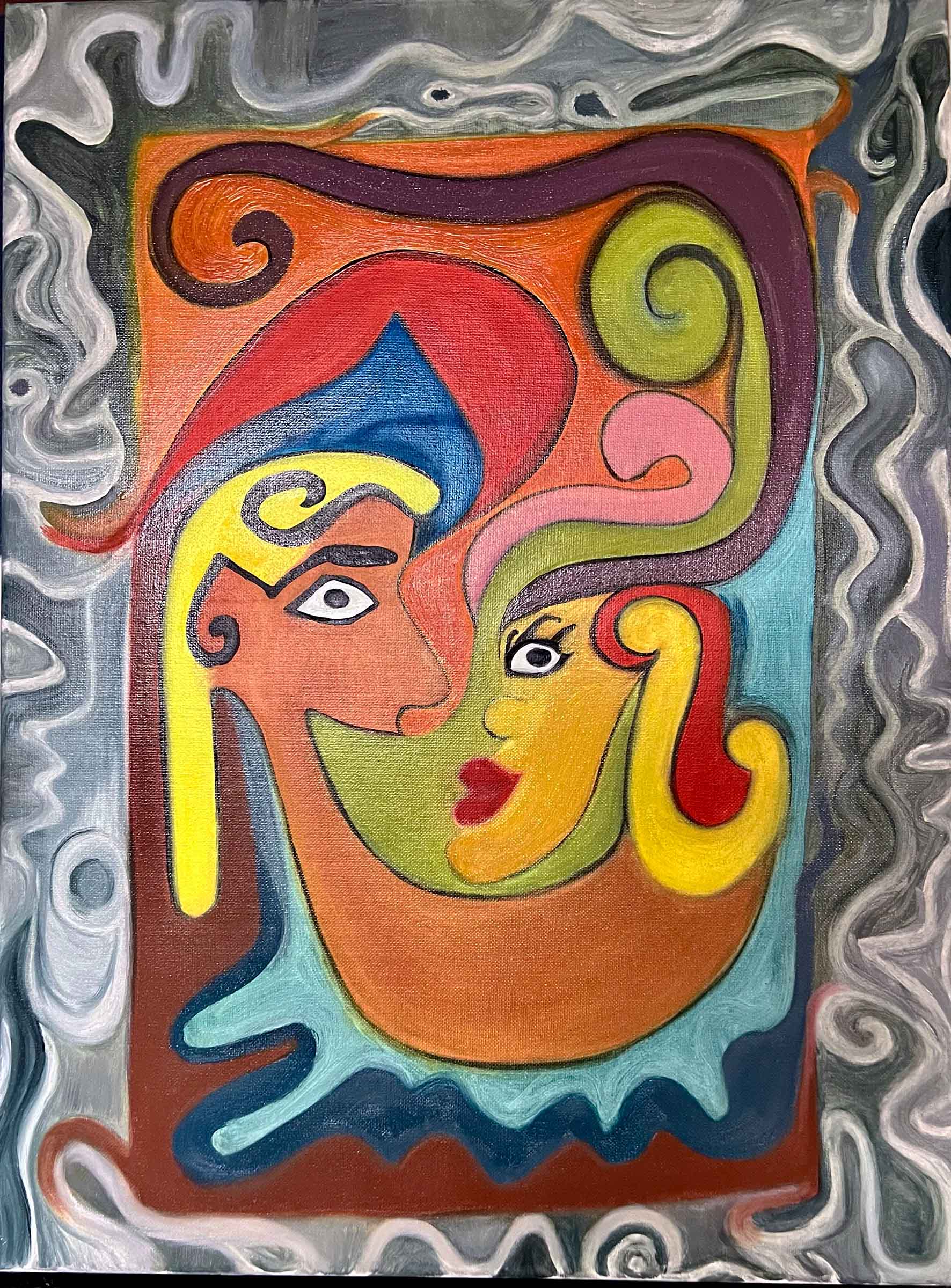
Completed oil painting